Test hardness, iron, manganese and pH first: iron adds to the load, and above about 5 ppm or with red water an iron filter goes ahead of the softener.
Test before you buy
- Hardness in grains per gallon (divide mg/L by 17.1).
- Iron and manganese in ppm, and whether the water comes out clear or rust-colored.
- pH and any rotten-egg (sulfur) smell.
About 15% of the US population relies on private wells, per the EPA; well owners test and treat their own water.
How iron changes the softener
Each ppm of ferrous iron counts as about 4 gpg of hardness when sizing (Nelsen). Most softeners are rated for about 2 ppm; Penn State Extension recommends softeners for iron only below about 5 mg/L with pH above 6.7.
Softeners built for well water: Fleck 5600SXT 48,000-Grain Water Softener and Filter System, Aquasure Harmony Series AS-HS48FM 48,000-Grain Water Softener and Filter System, AFWFilters Fleck 5600SXT 64,000-Grain Water Softener and Filter System.
When an iron filter comes first
Red water, iron above about 5 ppm or a sulfur smell means an iron filter ahead of the softener, such as iSpring WCFM400K Air-Injection Iron Filter, AFWFilters AIG15-25SXT-34 Air Injection Gold Fleck 2510SXT Air-Injection Iron Filter.
Products mentioned
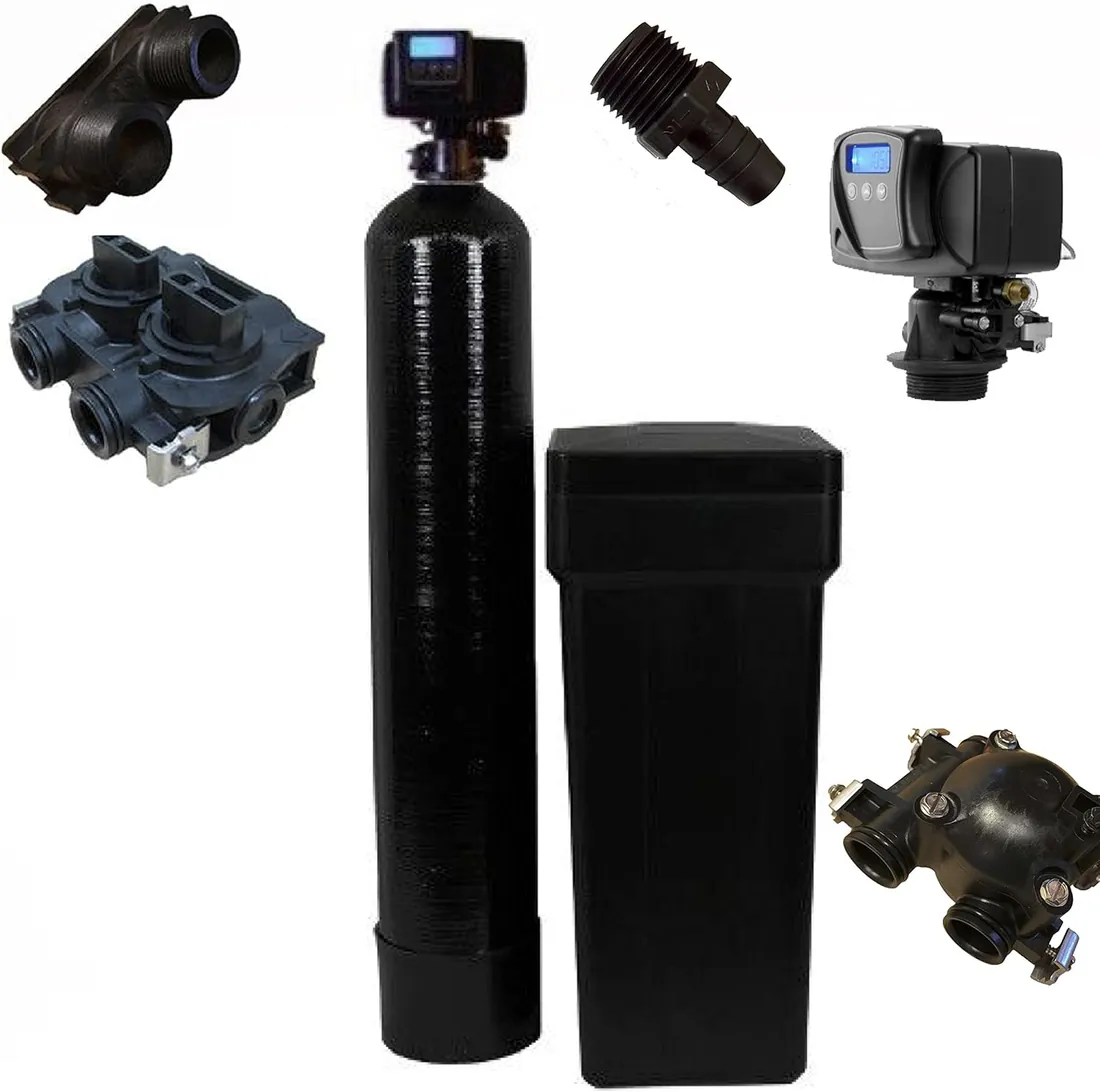
Fleck 5600SXT 48,000-Grain Water Softener and Filter System
48,000 grains · Fleck 5600 SXT
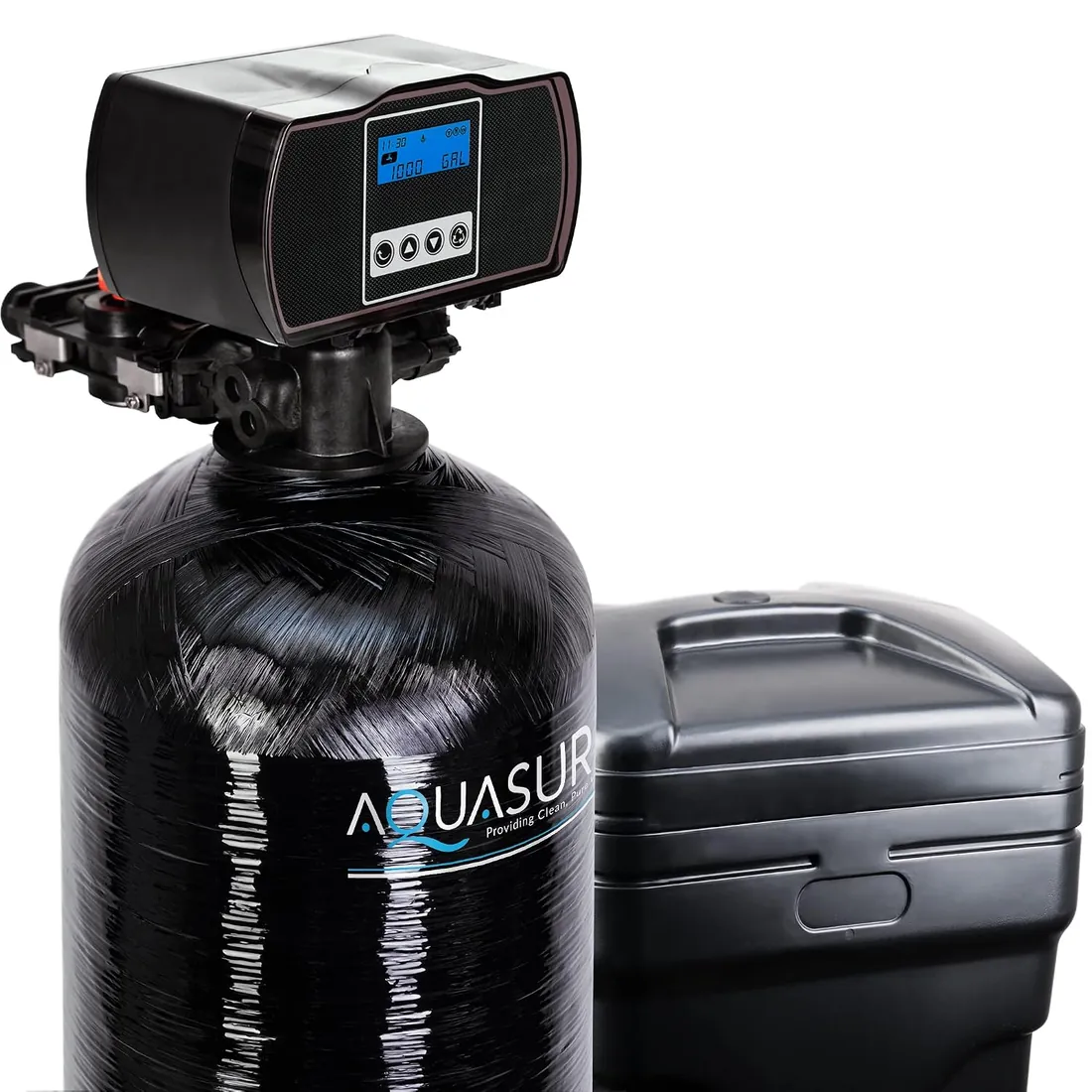
Aquasure Harmony Series AS-HS48FM 48,000-Grain Water Softener and Filter System
48,000 grains · 15 GPM
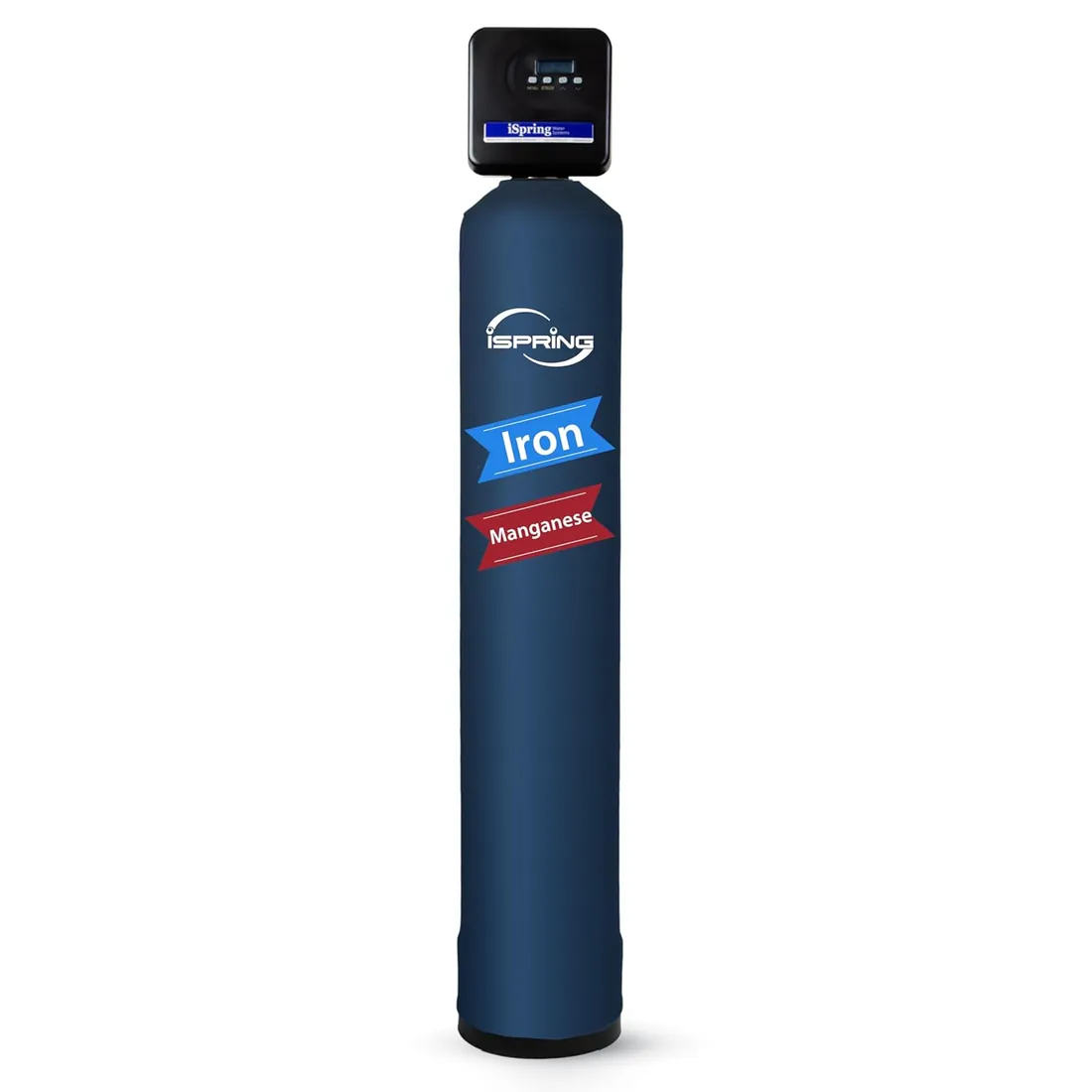
iSpring WCFM400K Air-Injection Iron Filter
Air-injection iron filter · 12 GPM