Use the hardness on your utility's water quality report, size without an iron adjustment, and consider 10% crosslink resin or a carbon stage for chlorine.
Find your hardness
Utilities publish hardness in mg/L or ppm; divide by 17.1 for grains per gallon. USGS classes 121 to 180 mg/L as hard and above 180 as very hard. The hardness converter does the math.
Chlorine and the resin
City water carries chlorine or chloramine. 10% crosslink resin is sold as more chlorine-tolerant than standard 8%, and combination systems put a carbon stage ahead of the softener: Fleck 5600SXT 48,000-Grain Water Softener and Filter System, Aquasure Harmony Series AS-HS48FM 48,000-Grain Water Softener and Filter System.
Sizing
With no iron, sizing is people × 75 gallons × hardness × about 7 days. Run the numbers; units such as Tier1 WS-165-132 32,000-Grain Water Softener, VEVOR BWsoftYT-5w 40,000-Grain Water Softener cover most households.
Products mentioned
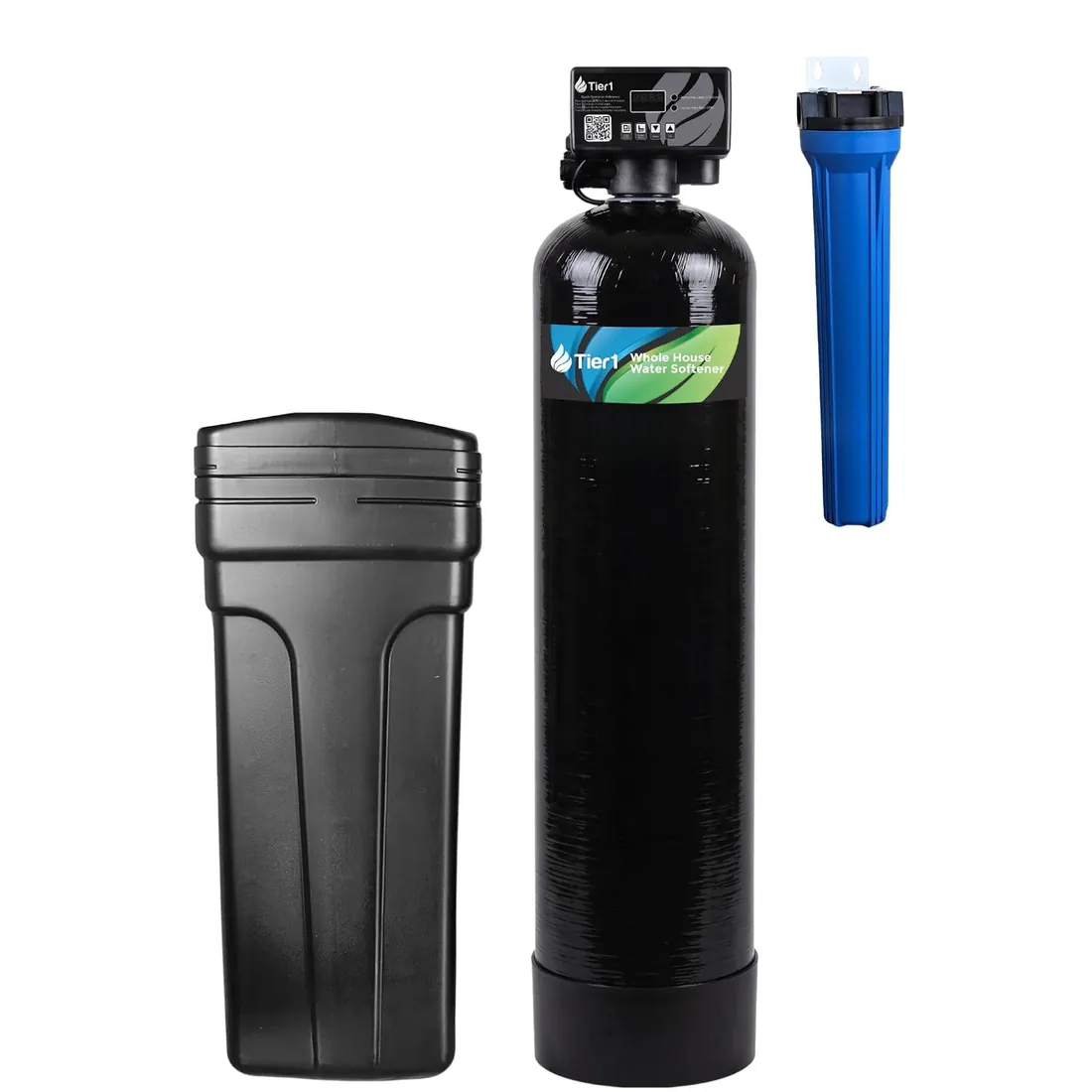
Tier1 WS-165-132 32,000-Grain Water Softener
32,000 grains · 18 GPM
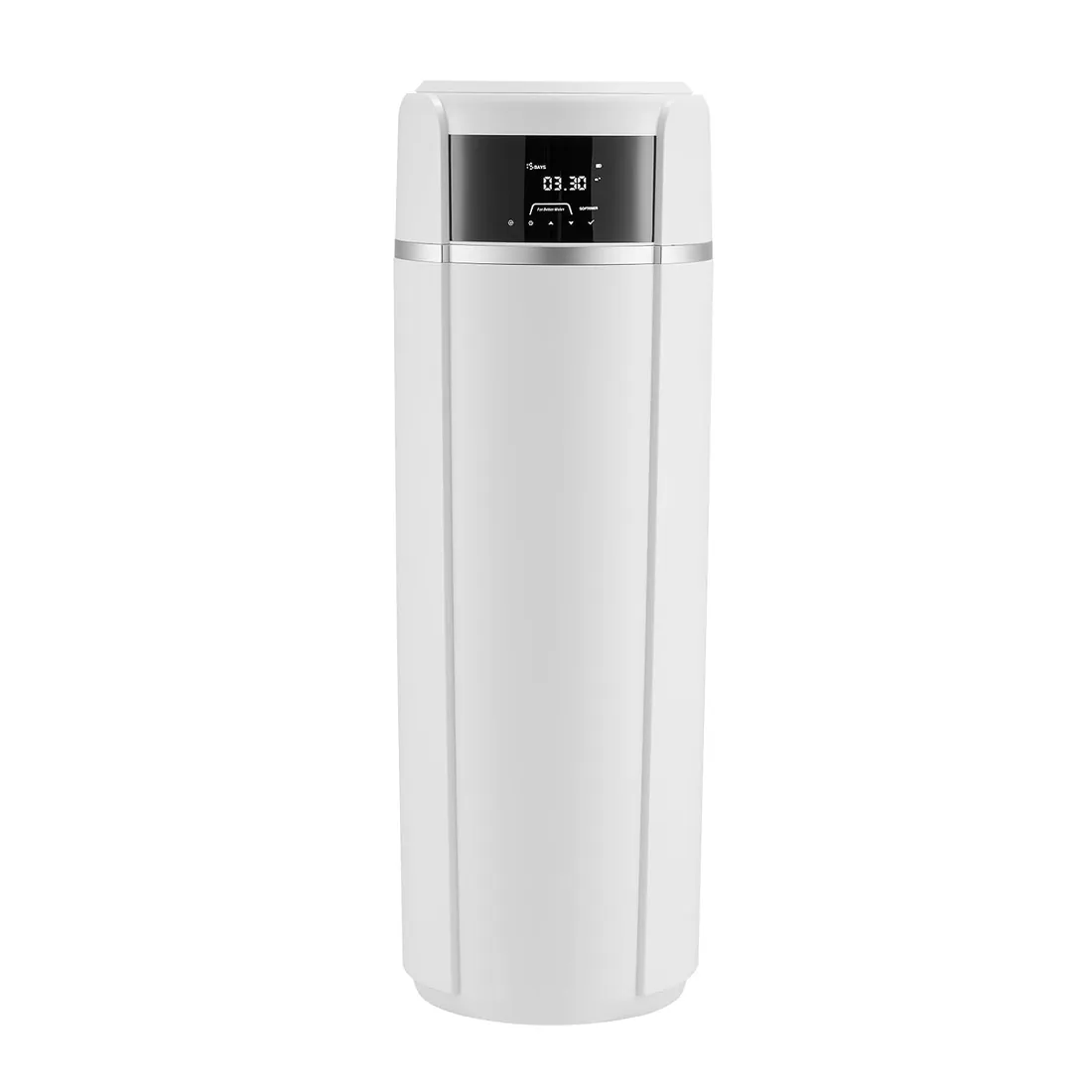
VEVOR BWsoftYT-5w 40,000-Grain Water Softener
40,000 grains · 15 GPM
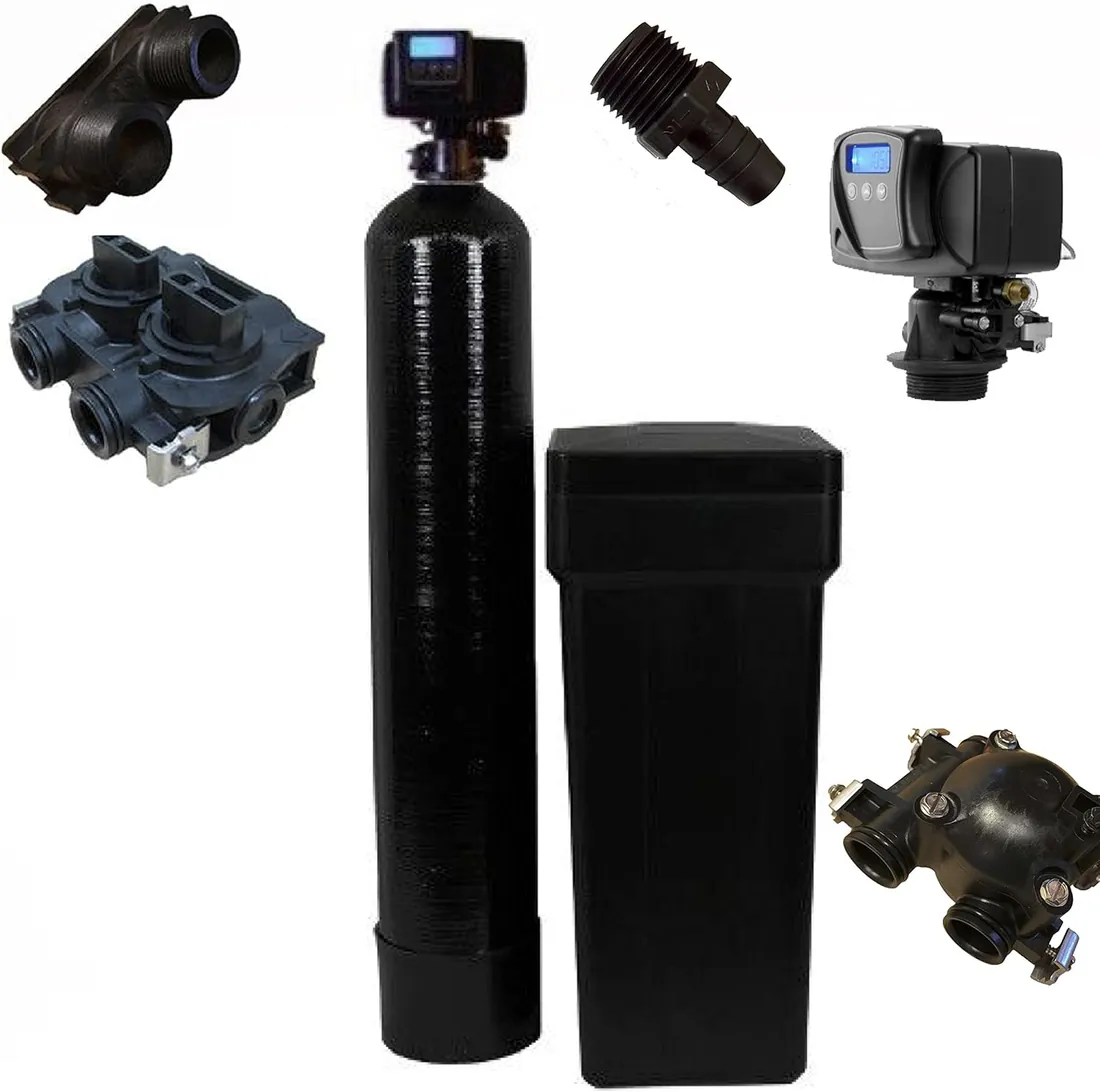
Fleck 5600SXT 48,000-Grain Water Softener and Filter System
48,000 grains · Fleck 5600 SXT