The short answer
All three regenerate an ion-exchange softener. Evaporated pellets are the purest and leave the least insoluble residue in the brine tank. Solar salt crystals cost less per bag and work in most softeners, with a little more residue. Potassium chloride replaces sodium for households limiting it; it costs more, and makers often call for a higher salt setting.
Side by side
| Pellets | Solar crystals | Potassium chloride | |
|---|---|---|---|
| Residue in the tank | Least | Some | Little |
| Cost per bag | Middle | Lowest | Highest |
| Sodium added to water | Yes | Yes | No (adds potassium) |
| Setting change | No | No | Often higher |
Bags we cover
Pellets: Morton 40 lb pellets. Solar crystals: Diamond Crystal 50 lb and Morton 40 lb. Potassium: Morton potassium chloride.
Avoiding bridges and mush
- Keep the salt above the water line in the brine tank.
- If the level stops dropping, a crust (bridge) may have formed; break it up gently.
- Residue at the bottom builds faster with lower-purity salt; clean the tank when it does.
Products mentioned
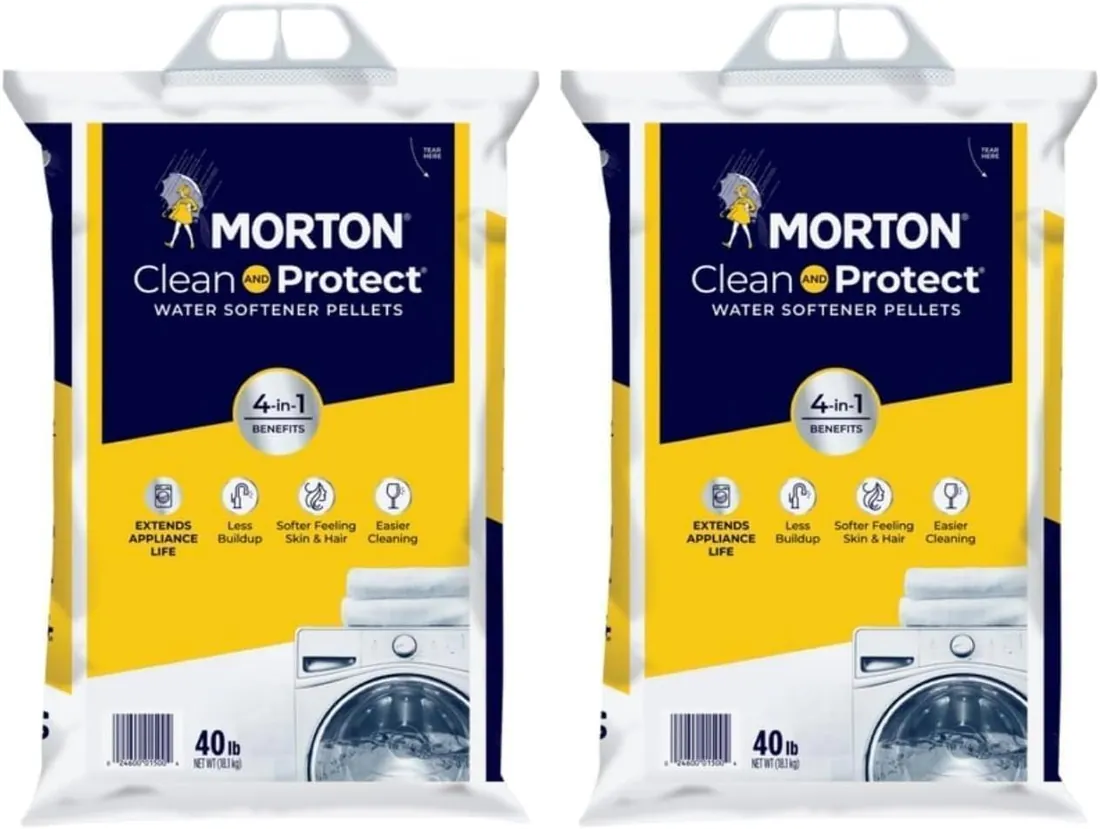
Salt pellets · Morton
Morton 40 lb Softener Salt Pellets
Pellets · 40 lb
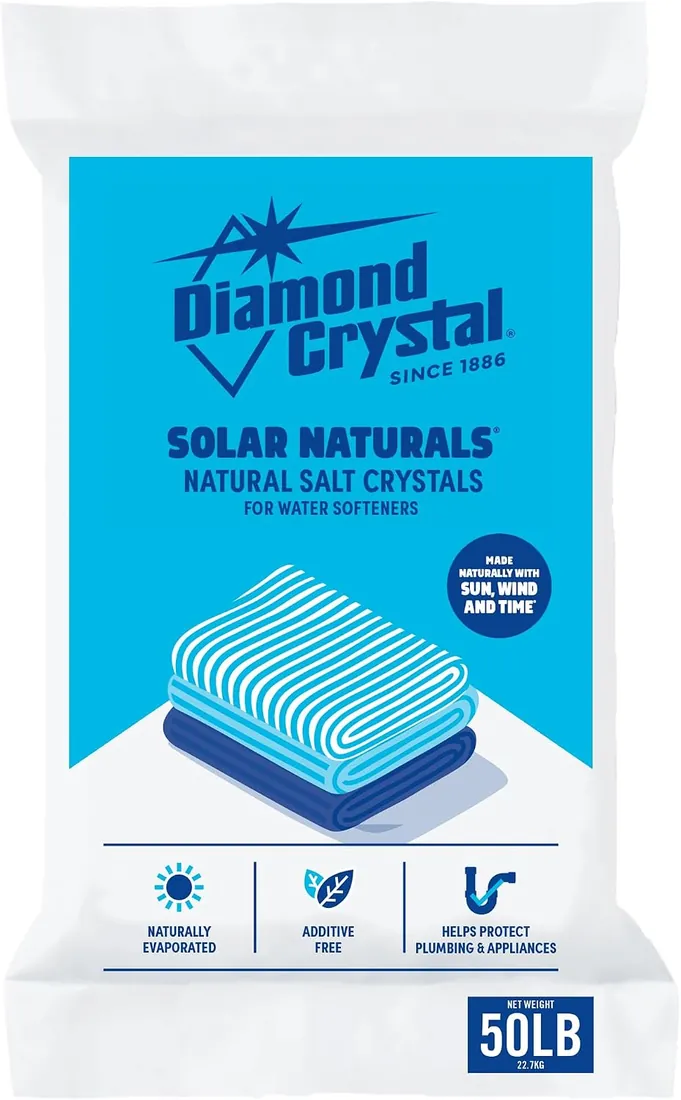
Solar salt crystals · Diamond Crystal
Diamond Crystal Solar Naturals 50 lb Solar Salt Crystals
Solar crystals · 50 lb
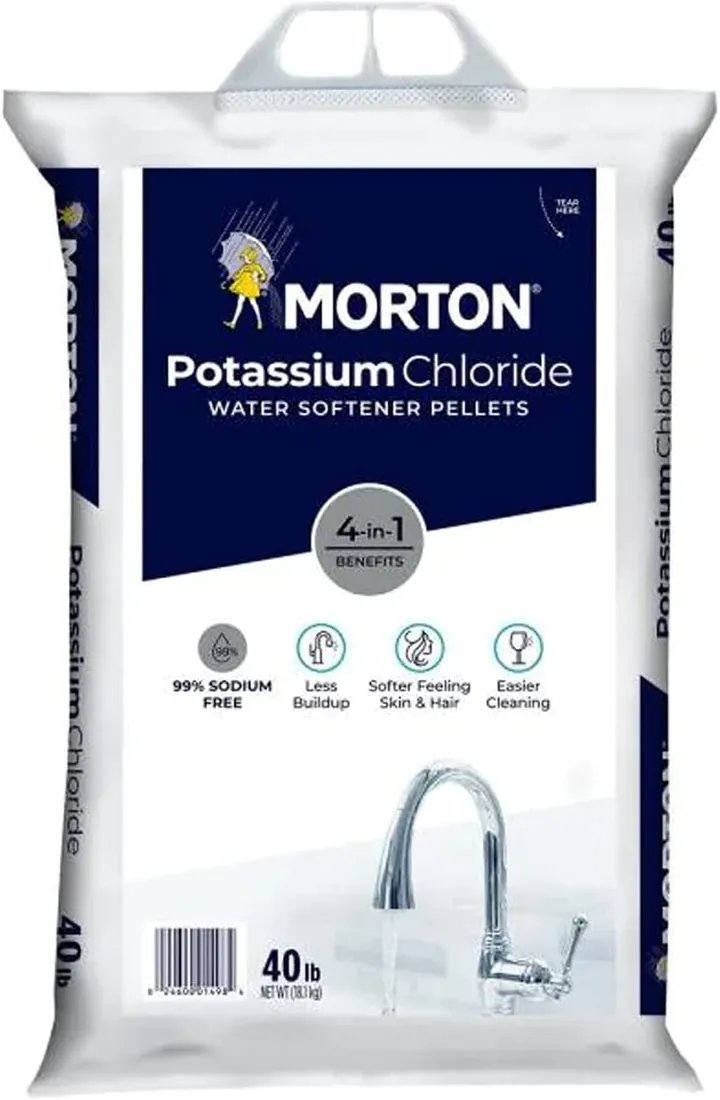
Potassium chloride · Morton
Morton F114980000G 40 lb Potassium Chloride Softener Pellets
Potassium chloride pellets · 40 lb
Questions readers ask
Can I mix pellets and crystals?
Generally yes; many owners do. Let the tank run low before switching to potassium chloride, and adjust the setting if the maker says to.
How much sodium does softened water add?
About 8 mg/L for each grain per gallon of hardness removed, per NDSU Extension.