The short answer
A softener's resin removes dissolved (ferrous, clear-water) iron along with hardness, but oxidized red iron fouls it. Nelsen notes most softeners are rated for about 2 ppm of ferrous iron, and Penn State Extension recommends softeners for iron only below 5 mg/L with pH above 6.7. Above that, or with red water or a sulfur smell, an iron filter goes ahead of the softener.
Reading the test
| Dissolved iron | What to do |
|---|---|
| Up to 2 ppm | Most softeners handle it; add 4 gpg per ppm when sizing |
| 2 to 5 ppm | Only a softener whose maker states an iron rating at or above it |
| Over 5 ppm, red water or rotten-egg smell | Iron filter first, then the softener |
Iron filter types
- Air injection, such as the iSpring WCFM400K: an air pocket oxidizes iron and sulfur, then backwashes it out; no chemicals.
- Media filters, such as the iSpring WCFM550K: oxidize and trap iron on a media bed; check pH and oxygen limits.
- Cartridges, such as the Home Master CFRFFE-20BB: drop into a 20-inch big housing and are replaced when spent.
Manganese and pH
Manganese often travels with iron and stains black. Penn State notes greensand and similar oxidizing filters suit combined iron and manganese of about 3 to 10 mg/L; Birm needs pH of at least 6.8 for iron and 7.5 for manganese.
Products mentioned
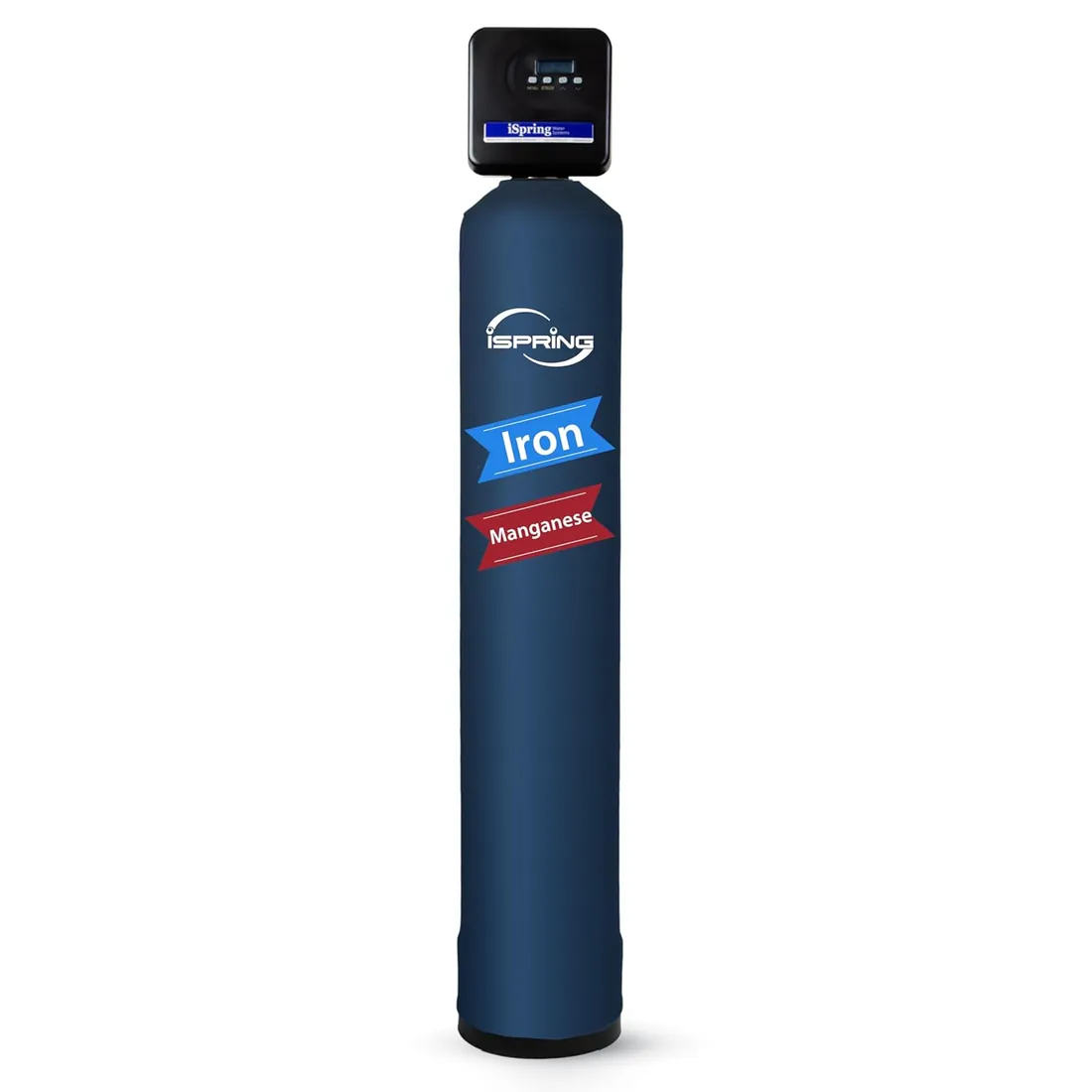
Air-injection iron filter · iSpring
iSpring WCFM400K Air-Injection Iron Filter
Air-injection iron filter · 12 GPM
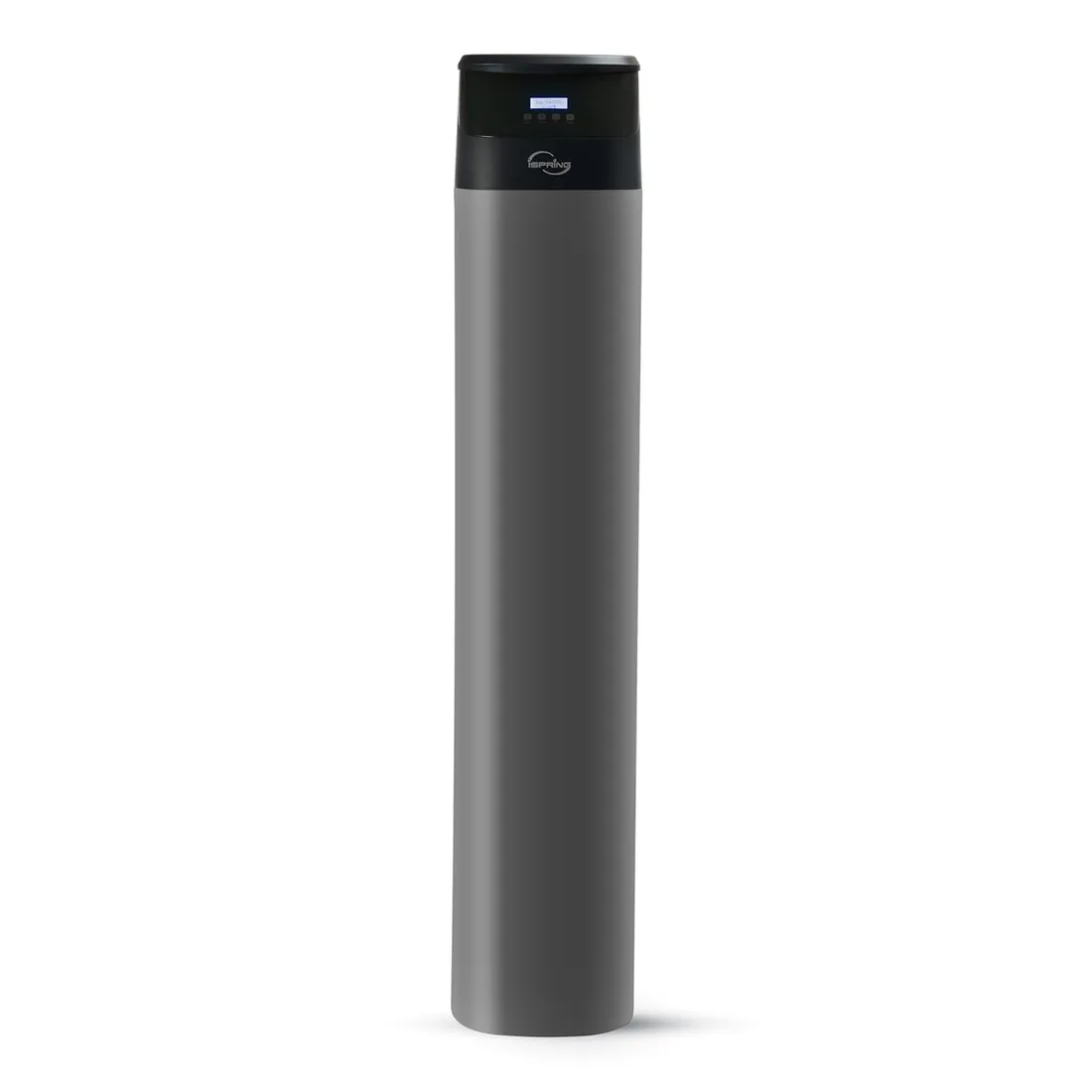
Media iron filter · iSpring
iSpring WCFM550K Iron Filter
Media iron filter · 12 GPM
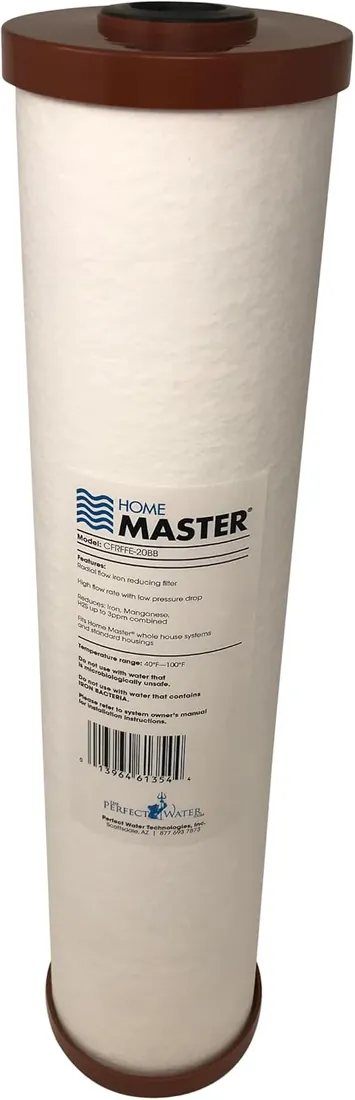
Iron filter cartridge · Home Master
Home Master Cfrffe-20BB Iron Filter Cartridge
Iron filter cartridge · 15 GPM
Questions readers ask
Will a water softener remove iron?
Dissolved iron up to about 2 ppm, yes, in most softeners; red (oxidized) iron fouls the resin and needs a filter.
Iron filter before or after the softener?
Before, so iron doesn't foul the softener's resin.