The short answer
Water reports usually give hardness in mg/L or ppm as calcium carbonate (the two are the same for water). Softeners are sized in grains per gallon. Divide by 17.1: 250 mg/L is about 14.6 gpg. Our hardness converter does it and shows the band.
The hardness scale
| Band | gpg | mg/L (ppm) |
|---|---|---|
| Soft | under 1 | under 17 |
| Slightly hard | 1 to 3.5 | 17 to 60 |
| Moderately hard | 3.5 to 7 | 60 to 120 |
| Hard | 7 to 10.5 | 120 to 180 |
| Very hard | over 10.5 | over 180 |
USGS uses the same mg/L breaks (60, 120 and 180) for soft, moderately hard, hard and very hard.
Ways to test
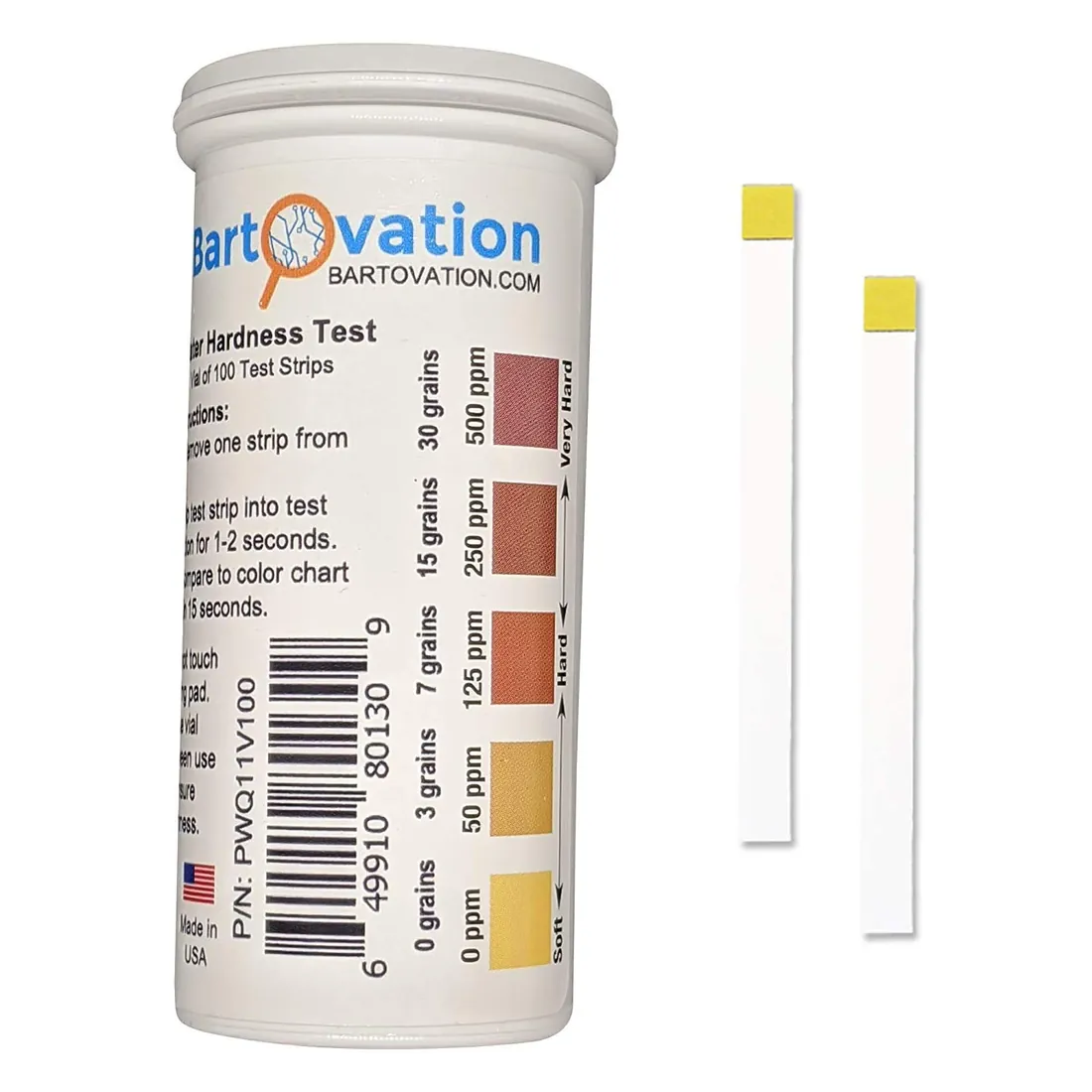
- Strips such as Bartovation hardness strips give a band in seconds.
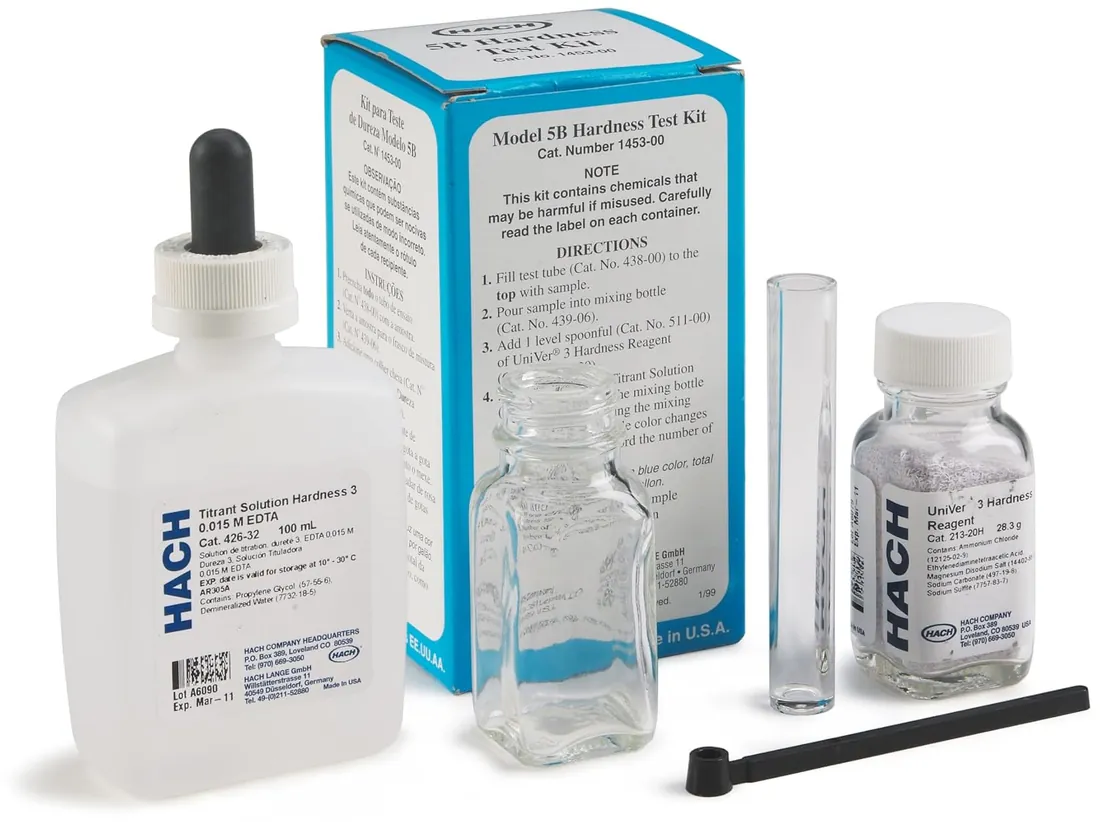
- Drop-count kits such as the Hach 5-B give a number in gpg, one drop at a time.
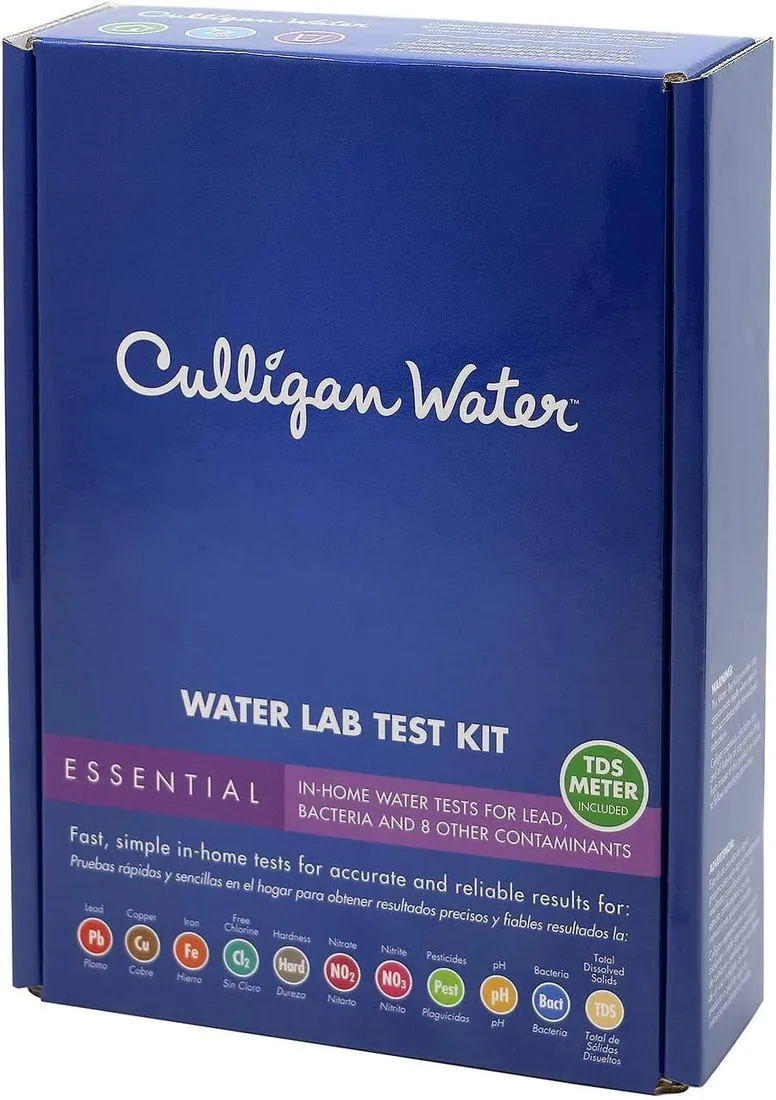
- A lab or multi-test kit such as the Culligan lab kit covers iron, pH and more.
A TDS meter measures total dissolved solids, not hardness, so it can't size a softener.
Well water
Test iron, manganese and pH too. Each ppm of ferrous iron adds about 4 gpg of load on a softener, and above about 5 ppm an iron filter comes first.
Products mentioned
Questions readers ask
Is 200 ppm hard water?
Yes: about 11.7 gpg, very hard on the usual scale.
What hardness needs a softener?
Above about 7 gpg (120 mg/L) scale and soap scum become noticeable; many households soften from there up.