The short answer
One grain per gallon is about 17.1 mg/L (ppm) of hardness as calcium carbonate; softeners are sized and set in grains.
The conversion
gpg = mg/L ÷ 17.1 (Nelsen; Penn State and NDSU round to 17). The converter does it.
| mg/L (ppm) | gpg | Band |
|---|---|---|
| 60 | 3.5 | slightly hard |
| 120 | 7.0 | moderately hard |
| 180 | 10.5 | hard |
| 250 | 14.6 | very hard |
| 350 | 20.5 | very hard |
Why grains
A softener's capacity is in grains removed between regenerations, so grains per gallon times gallons gives the load directly.
Test kits
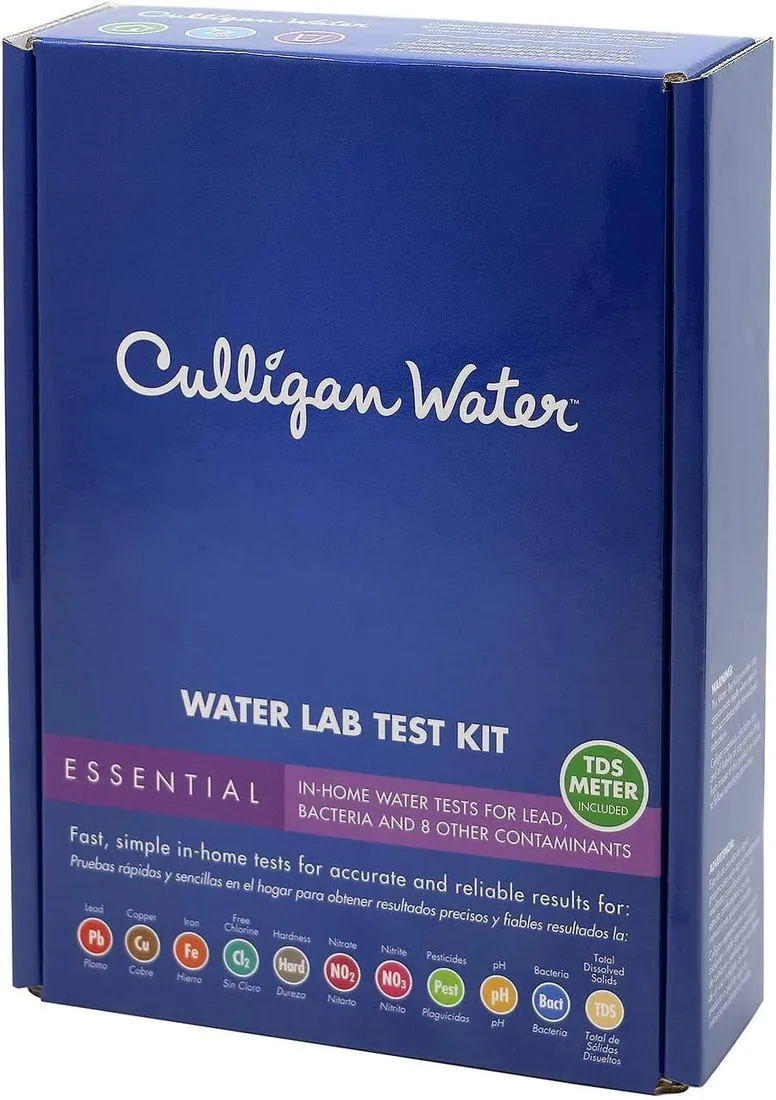
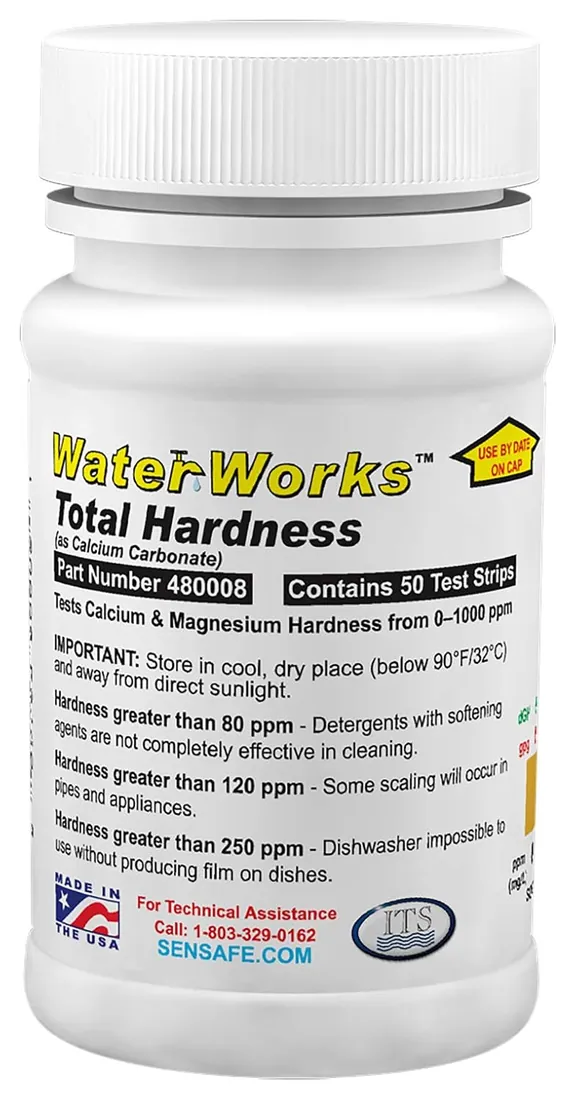
Drop-count kits read gpg directly: Culligan 1035250 Hardness Test Kit. Strips give a band: On The Go 481108 Hardness Test Strips.
Products mentioned
Questions readers ask
How many ppm is one grain per gallon?
About 17.1 ppm (mg/L) as calcium carbonate.
Is 10 gpg hard water?
Yes: hard on the usual scale (7 to 10.5 gpg), about 171 mg/L.